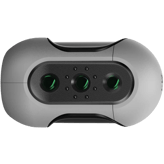
3DMakerPro Lynx Reviews: See Why 0 Shoppers Rated It 0 Stars!
With a 0/5 from 0 reviews, the 3DMakerPro Lynx 3d scanner gets a lot of love (and side-eye). We looked into both sides.
 Supermod
 Moderator
 Recaptor
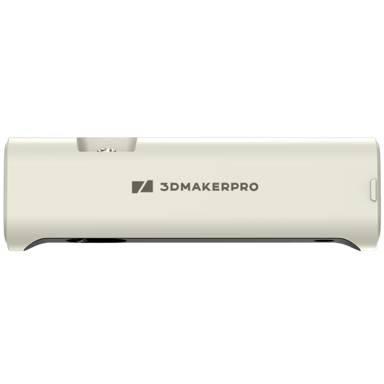
3DMakerPro Lynx 3D Scanner Review: A Professional Handheld Scanning Solution
In the ever-evolving realm of 3D scanning technology, the 3DMakerPro Lynx stands out as a robust professional handheld scanner designed with versatility and precision in mind. Crafted primarily for professionals engaged in reverse engineering, 3D printing, and design, this scanner aims to balance portability with high-quality scanning capabilities. On paper, it offers promising features that suggest a reliable workhorse tailored for capturing detailed geometries and textures, making it a compelling option for creators who require mobility without compromising on accuracy or ease of use.
Detailed Specs & Features
The Lynx employs a structured light scanning method, which is known for precision in capturing surface details, especially on complex surfaces. According to specs, it operates with a scan speed of 10 frames per second, enabling efficient capture without excessive downtime. Its single scan accuracy of 0.003937 inches (approximately 0.1 mm) and volumetric accuracy of 0.02 inches attest to its capacity for precision work. Users can expect a 9.84-inch field of view width and a depth of field of 31.5 inches, offering a sizable scanning range suitable for both small intricate objects and moderately large industrial parts.
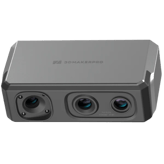
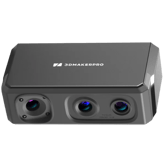
Portability is well-supported, with the Lynx being a portable handheld device, powered via USB, eliminating the need for bulky batteries or external power sources. This feature enables flexibility in different working environments, including outdoor use within an operating temperature range of 32-104°F. The device integrates a dual-camera system with CMOS sensors and an infrared light source operating at 850 nm wavelength, facilitating effective scanning of dark objects, though shiny or transparent materials pose a challenge, based on its material compatibility.
User Experience & Performance (Based on Specs)
Design & Build
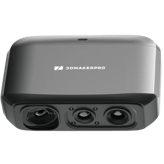
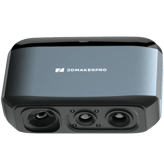
Reflecting on its physical parameters, the Lynx maintains a practical footprint at just 9.606 inches wide, 7.09 inches deep, and 2.36 inches high, weighing in at approximately 1.76 pounds. Its plastic body is paired with ergonomic design features and passive cooling, creating a user-friendly experience for extended scanning sessions. Protective features like the lens cover and anti-scratch surface enhance durability, making it a reasonable choice for field work. The inclusion of intuitive button controls and indicator lights streamlines its operation, especially beneficial for users transitioning from desktop to handheld scanning.
Performance
What makes the Lynx notable is its balanced scanning performance. The motion compensation and multi-scan alignment capabilities suggest fluid and accurate 3D reconstructions even when scanning dynamic or organic subjects. The real-time processing with immediate preview aids precision, minimizing the need for rescans, though some rescanning is still necessary given its reported rescan requirement. Overall, its continuous scan capability and good tracking performance ensure stable data capture across complex shapes.
Camera, Display & Audio Quality
Equipped with two cameras each sporting a 2MP sensor, this scanner is not made for ultra-high-resolution photogrammetry but suffices to render textures and colors adequately for most design and engineering purposes. The presence of a color camera and an IR cut optical filter lets it capture and export color data efficiently, complemented by color data export support in common formats like JPG and PNG. However, no HDR functionality slightly limits the dynamic range in texture captures under challenging lighting scenarios.
Extra Features
The scanning modes include handheld, turntable, marker-based, and markerless scanning, significantly expanding its adaptability. The included JMStudio software bundles automation tools, AI enhancement for detail recovery, mesh editing, smoothing, and measurement functionalities, making post-processing easier. Although the device does not support wireless connectivity options like Bluetooth or Wi-Fi and lacks external storage, its USB 3.0 connection ensures fast data transfer. The warranty coverage of 1 year with optional extensions and technical support infrastructure further instills confidence in long-term usability.
Pros & Cons
Pros
- High single scan accuracy, enabling precise 3D models
- Ergonomic, handheld design with USB power for portability
- Versatile scan modes, including markerless and turntable scanning
- Comprehensivesoftware includede with AI and automation features
- Support for scanning diverse materials and organic shapes, including human bodies
Cons
- No support for shiny or transparent objects limits applications
- No wireless connectivity options may hamper mobility in some workflows
- Manual calibration is required periodically; there is no auto-calibration feature
- Limited camera resolution restricts ultra-fine texture or color fidelity
Price & Value for Money
The 3DMakerPro Lynx is priced competitively at $252 at the 3DMakerPro Store, which is remarkably affordable for a professional-grade handheld 3D scanner. Given its 1-year warranty, extendable optionally, and power consumption pegged at only 10 watts via USB powering, the pricing feels justified for small businesses, educators, or enthusiasts stepping into professional scanning.
While high-end industrial scanners offer far greater accuracy and features, the Lynx's specification sheet indicates it hits a sweet spot for accurate scanning of medium-sized objects with respectable software support. Users requiring scanning of shiny or transparent materials or wireless freedom might find it less suited to their needs.
Quick Take
In short, the 3DMakerPro Lynx provides a compelling blend of portability, precision, and software sophistication, making it well-suited for professionals and hobbyists alike focused on reverse engineering and 3D printing preparation. If we look at the numbers alone, its high precision and adaptability across various materials mark it as a solid entry-level professional device without a sky-high price.
Closing Recommendation
Based on verified specs, the Lynx may be ideal for design studios, educational institutions, and small engineering teams that need a reliable handheld scanner with good accuracy and versatility but without heavy investment. Its limitations around shiny or transparent objects and lack of wireless connectivity should be duly considered before purchase. Overall, it helps users achieve detailed 3D capture with flexibility and decent build quality, backed by comprehensive software tools and manufacturer support.
Verdict
Rating: Based on the specifications and overall feature set, we believe 3DMakerPro Lynx deserves 4.2 out of 5.
- Winner Feature => Excellent single scan accuracy and versatility across materials make it a strong professional tool.
- Needs Improvement => Lack of wireless connectivity and auto calibration limits convenience and flexibility.
Reviews 0
The good, the bad, and the brutally honest.Average Rating

More 3D Scanners 80
Unlock more awesome finds.